Guides · Hudson, Florida
Hudson, Florida History: From Timber to Retirement
Hudson’s built environment tells the story of a town that gave up on timber, turned to water, then to retirement—without ever advertising itself. From Isaac Hudson’s 1878 post office house to the 1950s Port of Hudson dredge-and-fill suburb, the record is all there.
Isaac Hudson's 1878 House and Post Office
Isaac Hudson moved his family into the uninhabited brush of coastal Pasco County in 1878 and let a post office run out of his house. That is the entire origin story: a man, a house, a mail slot. The settlement carries his name because he was there first and nobody saw a reason to argue. The house was less a grand founding gesture than a practical arrangement—if you want mail in the brush, you put a counter in your front room. It worked well enough that the name stuck.
The Fivay Company Timber Boom and Bust
Before the water mattered, the trees did. The Fivay Company cut timber here and shipped it by rail to Tampa, and for a while that was the whole economy. Lumber paid for the early streets and the rail ties. Hudson looked like a company town with a future. Then Fivay failed in 1912, and the town stalled. The rail line still ran, but the reason for it had gone. Hudson sat quiet for a couple of decades—not dying exactly, just waiting to see what came next.
Shrimping and Fishing Era in Hudson
What came next was the Gulf. From the 1930s through the 1950s, shrimping and fishing employed about half the working men in Hudson. The timber money had walked away, but the water was right there, and it paid in shrimp and mullet instead of board feet. The town reshaped itself around docks and nets and ice houses. Not glamorous work, but steady. It gave Hudson a maritime identity it had not had before. The boats went out, the boats came back, and the town ate what it caught.
Hudson's Claim as Gopher Racing Capital
At some point, Hudson proclaimed itself the gopher racing capital of the world. Nobody disputed it, which is the key detail. There was no governing body for gopher racing, no rival claimant, no televised championship. Hudson simply announced the title and let it sit there. That is the town in one sentence: it never pretended to be more than it was, and it saw no harm in claiming something nobody else wanted. The proclamation was less a boast than a shrug with a sign on it.
How the Port of Hudson Neighborhood Was Built
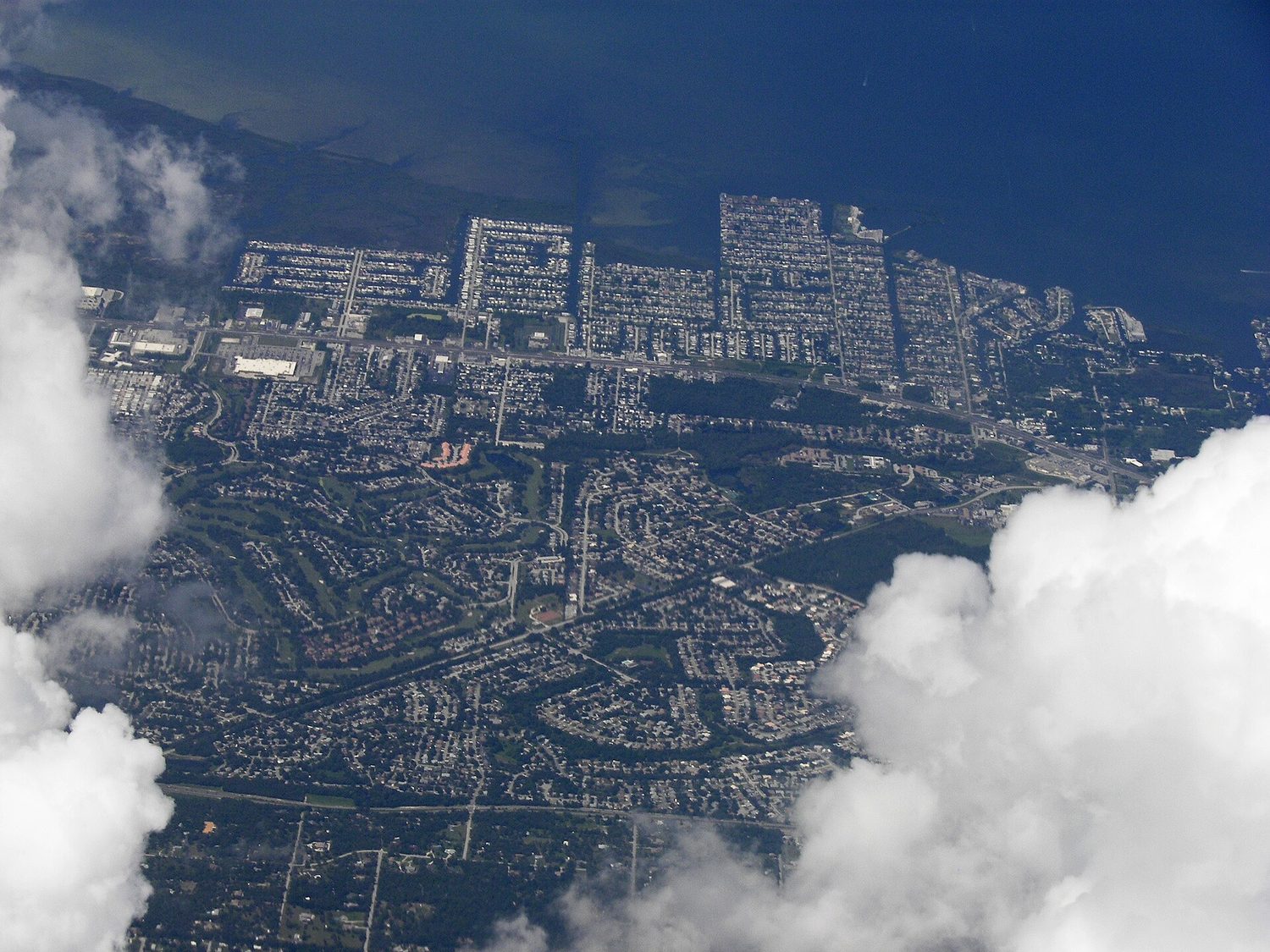
In 1950, W.L. Hendry and his sons dug inlets from the coast around Hudson Springs and used the fill to raise dry ground for houses. That is how the Port of Hudson neighbourhood was made: dredge a channel, pile the sand, build on top of it. The layout shows the work—every lot touches water or a view of it because the water was the point. The Hendrys did not clear land; they created it, pulling the neighbourhood up out of the bay one scoop at a time. A practical, unglamorous way to make a suburb. It worked.
Hudson's Demographics: A Retirement Town
The census tells the rest of the story. Hudson's population is 10,873 people with a median age of 64.4 years. That is a town that has aged in place, or retired into, or simply stayed. Of 7,632 housing units, 1,298 are held for seasonal or recreational use, and 2,042 are vacant. The houses are there; the people come and go with the seasons. Median home value sits at $239,200 and median gross rent at $1,038—affordable without being desperate. The unemployment rate is 4.7 percent, and median household income is $49,063. Only 18.1 percent of residents hold a bachelor's degree or higher. These are numbers that describe a town of working retirees and weekend visitors, not a commuter hub.
| Measure | Value |
|---|---|
| Population | 10,873 people |
| Median age | 64.4 years |
| Total housing units | 7,632 units |
| Homes held for seasonal or recreational use | 1,298 units |
| Vacant housing units | 2,042 units |
| Median home value | $239,200 |
| Median gross rent | $1,038 |
| Median household income | $49,063 |
| Unemployment rate | 4.7 percent |
| Bachelor's degree or higher | 18.1 percent |
The buildings tell the full arc. Isaac Hudson's house was a frontier post office. The Fivay mill was an industrial promise that broke. The shrimp docks were a working waterfront that fed the town. The Port of Hudson fill lots were a mid-century bet on waterfront living. And now the houses sit half-full, waiting for snowbirds and weekends. Hudson never marketed itself as anything, and it never needed to. It just kept changing what it did with the land and the water. The buildings show the record.
Common questions
- What is Hudson, Florida known for?
- Hudson once called itself the gopher racing capital of the world, and nobody argued. It started as a lumber town in 1878, then shifted to shrimping and fishing. Today it's a quiet coastal community with a median age of 64.4.
- Is there a beach in Hudson?
- Yes, Robert J. Strickland Memorial Park, built in the 1960s, is still the community's beach. It's the local spot for swimming and sun, not a tourist draw.
- How did Hudson get its name?
- Isaac Hudson moved his family into the brush here in 1878 and ran a post office from his house. The settlement took his name, and it stuck.
- What's the Port of Hudson neighborhood?
- It was made in 1950 when W.L. Hendry and his sons dug inlets from the coast around Hudson Springs and used the fill to raise dry ground for houses. That's why you see canals and waterfront homes there.
- Is Hudson a good place to retire?
- With a median age of 64.4 and a median home value of $239,200, it skews older and affordable. About 17% of housing units are for seasonal or recreational use, so it's a quiet, part-time kind of place.
- What happened to Hudson after the lumber era?
- The Fivay Company cut timber here and shipped it by rail to Tampa. When Fivay failed in 1912, the town stalled, and the water took over—shrimping and fishing employed about half the working men from the 1930s through the 1950s.
Every business named above is one we hold a listing for, and every date traces to a source on our sources page. We do not describe menus, interiors or service we have not verified. Details change — confirm before you travel.