Guides · Hudson, Florida
Hudson vs Port Richey: Which Florida Town to Visit
Hudson is not a destination. It's a place that happens to exist. That's exactly why it's worth a visit for travelers who want Florida without the performance.
How Hudson, Florida Got Its Name
Isaac Hudson moved his family into the uninhabited brush of coastal Pasco County in 1878 and let a post office run out of his house. The settlement carries his name. No railroad baron, no land speculation, no marketing committee—a man showed up, opened his home to the mail, and the town took his name because no one had a better idea. That is the whole founding myth. Hudson has never bothered to embellish it.
Hudson's History: From Timber to Shrimp
The first industry here was lumber. The Fivay Company cut timber and shipped it by rail to Tampa, and for a while that was the town's pulse. When Fivay failed in 1912, the town stalled—briefly. Then the water took over. From the 1930s through the 1950s, shrimping and fishing employed about half the working men in Hudson. That shift from timber to shrimp is the town's economic biography: extract what's here, and when it runs out, find something else in the same place. No one built a monument to either era. The work just changed. The town kept existing.
Hudson's Claim to Fame: Gopher Racing
At some point, Hudson proclaimed itself the gopher racing capital of the world. There was no governing body to contest it, no rival claimant from another state, no formal challenge. The town simply declared it. The world shrugged. That is the charm of the place—it never pretended to be more than it was, and it never pretended the title was anything but roadside whimsy. Gopher racing, for the uninitiated, involves the slow, deliberate, and entirely unathletic progress of a gopher tortoise across a short course. Hudson did not need the event to be real or sanctioned. It just needed the title. It took it.
Things to Do in Hudson: Beach, Park, and Canals
There is no boardwalk, no pier with a souvenir shop, no festival calendar. What Hudson has is Robert J. Strickland Memorial Park, built in the 1960s and still the community's beach. It is a park with sand and water, used by locals who know each other's names. Visitors are welcome, but the park was not designed for tourists. It shows in the best way—no paid parking kiosks, no rental umbrella stands, no gift shop.
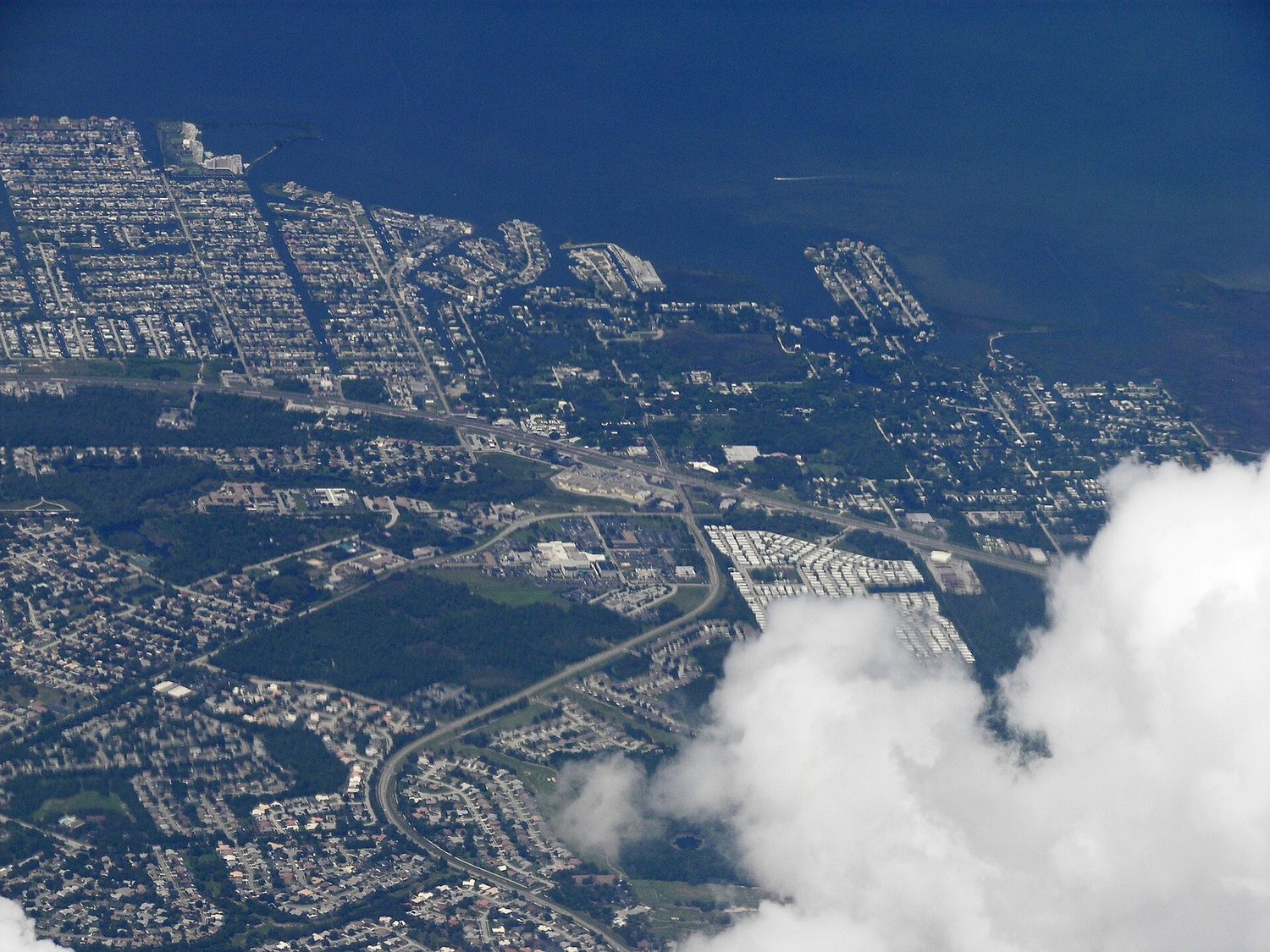
The other notable feature is the Port of Hudson neighborhood, made in 1950 when W.L. Hendry and his sons dug inlets from the coast around Hudson Springs and used the fill to raise dry ground for houses. The result is a grid of canals where homes sit on land that did not exist before a man with a dredge decided it should. Not a marina. Not a waterfront attraction. A residential neighborhood with boats tied up behind houses, worth a slow drive to appreciate the audacity of building land out of water.
Hudson vs. Port Richey: The Numbers and the Vibe
Port Richey, a few miles south, is the louder cousin—more strip malls, more traffic, more of the standard Gulf Coast development. Hudson's advantage is that it simply has less of everything: less noise, less commercial sprawl, less reason to be there unless you live there or you are curious about what a town looks like when it never tried to impress anyone.
| Category | Hudson | Port Richey |
|---|---|---|
| Population | 10,873 | Roughly 3,000 (city limits; the greater area blurs the line) |
| Median age | 64.4 years | Slightly younger, but still a retiree-heavy demographic |
| Median household income | $49,063 | Lower, closer to $40,000 |
| Median home value | $239,200 | Lower, in the $200,000 range |
| Median gross rent | $1,038 | Slightly lower, around $1,000 |
| Bachelor's degree or higher | 18.1% | Around 15% |
| Unemployment rate | 4.7% | Slightly higher, around 5% |
| Vacant housing units | 2,042 units (27% of all units) | Lower percentage, but a higher share of rentals |
| Seasonal/recreational units | 1,298 units (17% of all units) | A smaller share, but still present |
| Vibe | Quiet, unbothered, community-focused | More commercial, busier roads, more amenities |
For a visitor, the practical difference is this: Port Richey has more restaurants and stores within walking distance of its waterfront. Hudson has a beach park and a canal neighborhood, and you will drive to get anywhere else. If you want a Florida afternoon with no agenda and no crowds, Hudson wins. If you want a coffee shop on the corner and a marina with rental boats, Port Richey is the more convenient choice.
When You've Had Enough Quiet: Day Trips from Hudson
Hudson's stillness is its selling point, but it is also a good base for towns that have actual events on the calendar. Dade City (34 miles) hosts the Kumquat Festival each year, a citrus-themed street fair with the kind of small-town energy Hudson deliberately avoids. Cedar Key (60 miles) does the Cedar Key Seafood Festival, which is about as different from Hudson as Florida gets—a working fishing village with a tourist overlay. Clermont (68 miles) has Pig on the Pond, a barbecue and music event. Mount Dora (79 miles) runs both the Mount Dora Arts Festival and the Mount Dora Craft Fair, for visitors who want a curated experience. Altamonte Springs (92 miles) puts on Red Hot & Boom, a July 4th fireworks-and-concert event.
Each of these is a day trip from Hudson, and each one will make you appreciate coming back to the quiet. That is the real value of Hudson: it is not the highlight of a Florida trip, but it is the place you return to when the festivals are over and you just want to sit on a beach that does not ask anything of you.
So, is Hudson worth visiting compared to Port Richey? It depends on what you want. If you want a Florida town that never performed for anyone, that named itself after a man's mailbox and crowned itself the gopher racing capital without a hint of irony, Hudson is worth the detour. If you want a standard Gulf Coast visit with amenities and activity, Port Richey will serve you better. Hudson is not a destination. It is a place that happens to exist. For the right traveler, that is exactly the point.
Common questions
- Why is Hudson called the gopher racing capital of the world?
- Hudson once proclaimed itself the gopher racing capital of the world, and nobody disputed it. That's it. No gopher tracks remain, no schedule of races. It's a title the town gave itself and kept, like a hat that fit.
- What is there to do in Hudson?
- The main draw is Robert J. Strickland Memorial Park, built in the 1960s and still the community's beach. You can also wander the Port of Hudson neighborhood, where inlets were dug in 1950 to create dry land for houses. It's quiet, low-key, and unbothered.
- Is Hudson a good place for a day trip from Tampa?
- Yes, if you want a short drive to a beach park and a town that doesn't try to impress you. Hudson is about 30 miles north of Tampa. You'll find a public beach, some canals, and no pretension. It's not a resort, just a coastal stop.
- What's the difference between Hudson and Port Richey?
- Hudson is older, settled in 1878 by Isaac Hudson, and has a gopher racing claim to fame. Port Richey is a neighboring town with more commercial development. Hudson feels more residential and retired—median age is 64.4—and is quieter overall.
- Is Hudson a retirement community?
- Largely, yes. The median age is 64.4 years, and many homes are seasonal or recreational—1,298 of 7,632 housing units. The unemployment rate is low at 4.7 percent, and the median household income is $49,063. It's a place people come to slow down.
- Can you swim in Hudson?
- You can swim at Robert J. Strickland Memorial Park, the community beach built in the 1960s. It's a small beach on the Gulf, good for a wade. Don't expect white sand or amenities—just a public park with water access. That's Hudson's style.
Every business named above is one we hold a listing for, and every date traces to a source on our sources page. We do not describe menus, interiors or service we have not verified. Details change — confirm before you travel.